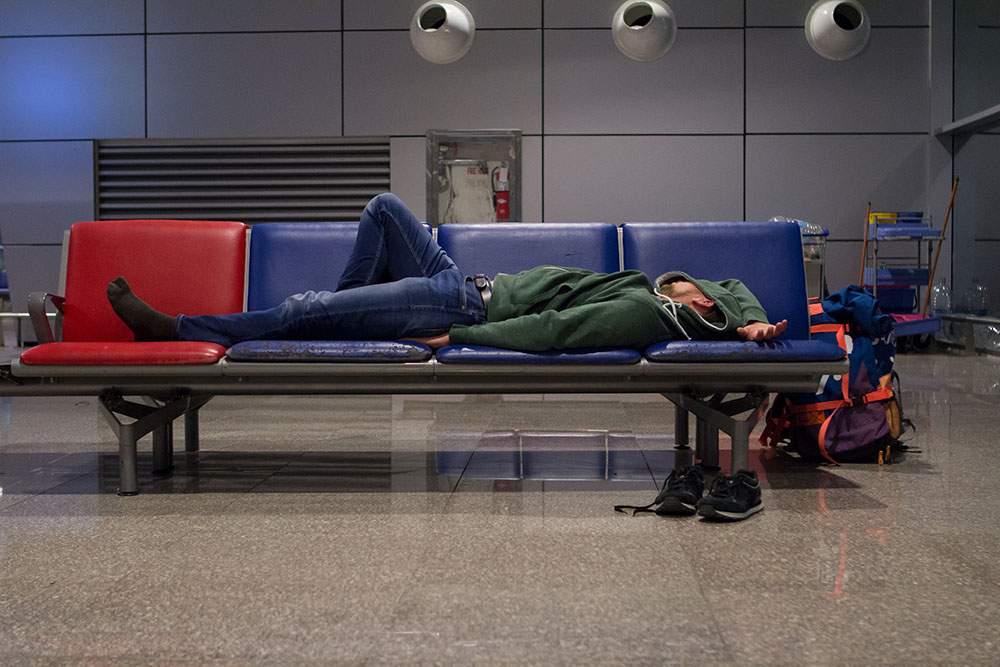
The Atlantic just made the case for Newark as the worst airport in America. Fair enough. Newark has reportedly ranked badly on stress, food, disruptions, and delays, and the piece makes a strong case that it has become a kind of shorthand for everything people hate about flying right now. But the more interesting point in the article is bigger than Newark.
Because the real story is not that one airport is awful.
The real story is that modern air travel increasingly feels like an endurance event.
Newark may be the headline, but it is not the whole problem
Part of what makes the Atlantic piece work is that it does not pretend airport misery belongs to one place. Reagan had the most delays among major U.S. airports in 2025, according to the Bureau of Transportation Statistics. Dallas gets singled out for its sheer size, including a 1.5-mile distance from security to the farthest gate. Atlanta gets singled out for volume, with security lines stretching past two hours during this week’s disruptions.
That is what makes the “worst airport” conversation so relatable. Airports fail differently.
Some exhaust you with size.
Some exhaust you with crowds.
Some exhaust you with constant delays.
And some seem to combine all of it into one fluorescent, overpriced, low-battery experience.
Newark may wear the crown in this story. But it is really just the mascot.
The bigger issue is what flying feels like now
The Atlantic puts it well. Airports are a vortex of confined spaces, limited options, bad Wi-Fi, overpriced food, fluorescent lighting, and other people. That line lands because it captures something travelers already know in their bones. Flying no longer feels stressful only when something goes wrong. It often feels stressful by default.
You feel it in the tiny indignities.
The hunt for a working outlet.
The sandwich that costs too much and disappoints anyway.
The gate change that sends everyone lurching across the terminal.
The chair that dares you to sit in it for more than ten minutes.
The creeping sense that every part of the experience is asking you to be more patient than any normal person should have to be.
That is why people react so strongly to airport rankings. It is not really about rankings. It is about recognition.
When someone says Newark is the worst airport in America, what a lot of travelers hear is: yes, someone else sees it too.

Airports may still be chaos. Lounges make them feel like a win.
Nomados Pro makes rough travel days better with airport lounge access at 1500+ lounges plus practical tools for modern travelers.
See what’s included
Why airport lounges matter more than they used to
This is the part that often gets missed.
Lounges are easy to dismiss as a luxury. A nice extra. Something for frequent flyers, business travelers, or people trying to cosplay old-money ease between flights.
But that is not really what lounges are doing in 2026.
What they are doing, increasingly, is giving travelers one functioning patch of humanity inside an experience that often feels designed to wear them down.
A place to sit that does not feel punitive.
A place to charge your phone without guarding an outlet like it is a campsite.
A place to get food or coffee without paying premium prices for disappointment.
A place where the noise drops, the lighting softens, and the airport stops feeling quite so committed to your decline.
Lounges do not fix delays. They do not make weather go away. They do not solve airline chaos, staffing issues, security backups, or infrastructure problems.
They just make a bad airport more survivable.
And right now, that matters more than people think.
Some airports are terrible. Some are terrible with an escape hatch.
That is the distinction travelers feel immediately, whether they phrase it that way or not.
Dallas and Atlanta are both used in the Atlantic piece as examples of different kinds of airport suffering. Dallas is punishing because of scale. Atlanta is punishing because of volume. Newark, in the article’s telling, is where bad airport qualities seem to pile up into one especially grim package.
The practical difference is that in some airports, there is at least a way to step out of the chaos for a while.
In others, there is not.
That does not solve the airport. But it absolutely changes the experience of being trapped inside it.
A bad airport with lounge access is still a bad airport.
But it is a bad airport with an escape hatch.
This is why airport access is becoming infrastructure
The old pitch for lounges was aspiration.
The new pitch is practicality.
Travelers are not looking for glamour. They are looking for relief. They want fewer points of friction on a day that is already full of them. They want one calm place inside a system that feels increasingly frayed. They want to feel less like they are being processed and more like they are still a person.
That is why airport access belongs in the same conversation as mobile data, travel insurance, and the other things people increasingly need on the move. It is not just a perk. It is part of making travel workable.
Not perfect. Not elegant. Just workable.
And honestly, that is already a lot.
The worst airport is not really the story
Yes, Newark makes a compelling villain. Yes, the article is funny because it takes a feeling so many travelers already have and gives it a name. And yes, there will always be a certain pleasure in seeing one especially miserable airport publicly called out.
But the larger point matters more.
The real issue is not that one airport is uniquely cursed.
It is that modern flying has become a system where too many airports feel vaguely punishing by default, and where small pockets of calm now matter far more than they used to.
That is why lounges matter.
Not because they make airports glamorous.
Because they make them bearable.
Frequently Asked Questions
What is considered the worst airport in America?
That depends on what you measure, but The Atlantic argued that Newark deserves the title because it performs badly across several categories travelers actually feel, including delays, disruptions, stress, and food quality. The bigger takeaway is that airport misery is not limited to one place. Different airports wear people down in different ways.
Why do some airports feel worse than others?
Some airports are exhausting because they are huge. Some are exhausting because they are crowded. Some are exhausting because of delays, poor layout, limited food options, or nowhere comfortable to wait. The worst airports usually combine several of those problems at once.
Why do airport lounges matter so much now?
Lounges matter because modern airports often feel more stressful than they used to. A lounge does not fix delays or cancellations, but it can give you a quieter place to sit, charge your phone, eat something decent, and wait without feeling like the airport is actively punishing you.
Do airport lounges actually make travel easier?
They can. Lounges do not change the airport itself, but they often make the experience more manageable. Better seating, more reliable Wi-Fi, power outlets, snacks, drinks, and a calmer environment can make a long delay or layover much more bearable.
What is Nomados Pro?
Nomados Pro is a membership designed to make travel work better for modern travelers. It includes tools and benefits that help you move through travel with less friction, including airport lounge access, along with other travel infrastructure built for people who are often on the move.
Does Nomados offer airport lounge access?
Yes. Nomados Pro includes airport lounge access as part of the membership experience. The point is not to make airports glamorous. It is to make them more usable, more comfortable, and less draining when travel days go sideways.
Why does Nomados include airport lounges?
Because lounge access is no longer just a perk for frequent business travelers. It is one of the few practical ways to make a bad airport day less miserable. If airports are increasingly crowded, delayed, and stressful, having a better place to wait starts to feel less like a luxury and more like useful travel infrastructure.
Disclosure: Portions of this article were created with the assistance of AI tools and reviewed by the Nomados editorial team for accuracy and clarity.