
Which Southeast Asian country is best for digital nomads in 2026?
Southeast Asia remains the world’s most competitive region for digital nomads, and in 2026, the race between Thailand, Indonesia, Vietnam, and the Philippines has never been closer. Thailand set the bar with its Destination Thailand Visa (DTV) — a fully operational 5-year multiple-entry permit that gives remote workers legal clarity and long-term stability. Indonesia is pushing hard with its own long-stay visa reforms and Bali’s unmatched nomad infrastructure. Vietnam offers the lowest cost of living in the group and a rich, diverse network of cities. The Philippines brings English-speaking locals, island variety, and one of the region’s most welcoming cultures.
The right choice depends on what you value most: visa security, cost, community, lifestyle, or connectivity. This guide breaks down all four countries across every dimension that matters.
Thailand vs Indonesia vs Vietnam vs Philippines
Quick comparison for digital nomads in 2026

How Does Thailand Compare to the Rest of Southeast Asia for Digital Nomads?
Thailand has pulled ahead of the region on one critical metric: legal clarity. The Destination Thailand Visa (DTV), now fully operational with over 35,000 applications processed, gives remote workers a 5-year multiple-entry permit with 180-day stays per entry. Holders can legally work for foreign companies, open local bank accounts, and bring dependents. No other country in this comparison offers anything close to that combination in 2026.
Beyond the visa, Thailand’s infrastructure is the strongest in the group. Bangkok offers gigabit fiber and one of Southeast Asia’s most developed coworking ecosystems. Chiang Mai remains the region’s most established digital nomad city, with a decade-deep community and the lowest costs of any major Thai hub. The islands — Koh Phangan, Koh Samui, Phuket — now have satellite backup connectivity and beach-side coworking.
Thailand is best for: Nomads who want legal certainty, strong infrastructure, and the option to base long-term without visa stress.
Where Thailand falls short: Monthly costs are higher than Vietnam and the Philippines, and the DTV requires a THB 500,000 (~USD 14,000) bank balance to qualify. Immigration tightened scrutiny on back-to-back tourist visa runs in 2025, so the DTV is now the clearest long-term path.
→ Read the full guide: Thailand for Digital Nomads

How Does Indonesia (Bali) Compare to Other Southeast Asian Countries for Digital Nomads?
Bali is the lifestyle leader of this group. No other destination in Southeast Asia — arguably the world — matches the combination of coworking density, wellness culture, surf access, and community that Canggu and Ubud have built over the past decade. Dojo Bali, Outpost, Hubud, and Tropical Nomad are among the most well-run coworking spaces in Asia. The expat and nomad community is deeply embedded, with events, masterminds, and skill-sharing as part of daily life.
On the visa front, Indonesia is in transition. The B211A business visa remains the workhorse for medium-term stays — 60 days extendable to 180. The promised 5-year Digital Nomad Visa, with zero local income tax on foreign earnings and an estimated USD 2,000/month income requirement, has been anticipated since early 2025. As of early 2026, nomads should confirm current status before planning long-term stays around it.
Indonesia/Bali is best for: Nomads who prioritize lifestyle, community, surfing, wellness, and creative inspiration over visa simplicity.
Where Bali falls short: Visa uncertainty remains a genuine friction point until the 5-year DNV is fully operational. Traffic in Canggu has worsened. Monthly costs are the highest in this group for comparable lifestyle quality, and internet reliability outside major hubs can be inconsistent during storms.
→ Read the full guide: Bali for Digital Nomads

How Does Vietnam Compare to Thailand and Indonesia for Digital Nomads?
Vietnam is the value leader of Southeast Asia. A mid-range nomad lifestyle in Ho Chi Minh City or Da Nang costs $800–1,300/month — significantly less than comparable quality in Bangkok or Bali. The food is exceptional and remarkably cheap. The country spans an enormous geographic range, from the mountain culture of Hanoi and Sapa to the beach-city balance of Da Nang to the entrepreneurial energy of Ho Chi Minh City.
Vietnam’s weakness in 2026 is still visa structure. There is no official digital nomad visa. The E-Visa gives 90 days for citizens of 80+ countries, and longer stays require a business visa through a local sponsor or periodic visa runs to Cambodia, Thailand, or Malaysia. Remote work for foreign employers is tolerated but not explicitly legal. Nomads planning stays beyond 90 days need to plan their visa strategy carefully.
Vietnam is best for: Nomads who prioritize affordability, cultural richness, and geographic variety — and are comfortable managing visa logistics.
Where Vietnam falls short: No official long-stay option for remote workers. Internet outside major cities is inconsistent. English proficiency is more limited than the Philippines or Thailand’s tourist zones. Traffic and air quality in Hanoi and Ho Chi Minh City are genuine daily realities.
→ Read the full guide: Vietnam for Digital Nomads
How Does the Philippines Compare to Thailand, Vietnam, and Bali for Digital Nomads?
The Philippines has one underrated advantage that no other country in this group can match: English is an official language spoken fluently by most locals. For nomads who value easy daily communication, navigating bureaucracy, finding local help, and building community, the Philippines removes an entire layer of friction that exists everywhere else in this comparison.
The visa situation is surprisingly flexible. Most nationalities enter visa-free for 30 days, and extensions can be processed in-country for up to 36 months total without leaving — making it one of the most practical long-stay options in the region despite having no official digital nomad visa. Monthly costs run $900–1,800, competitive with Thailand’s lower end.
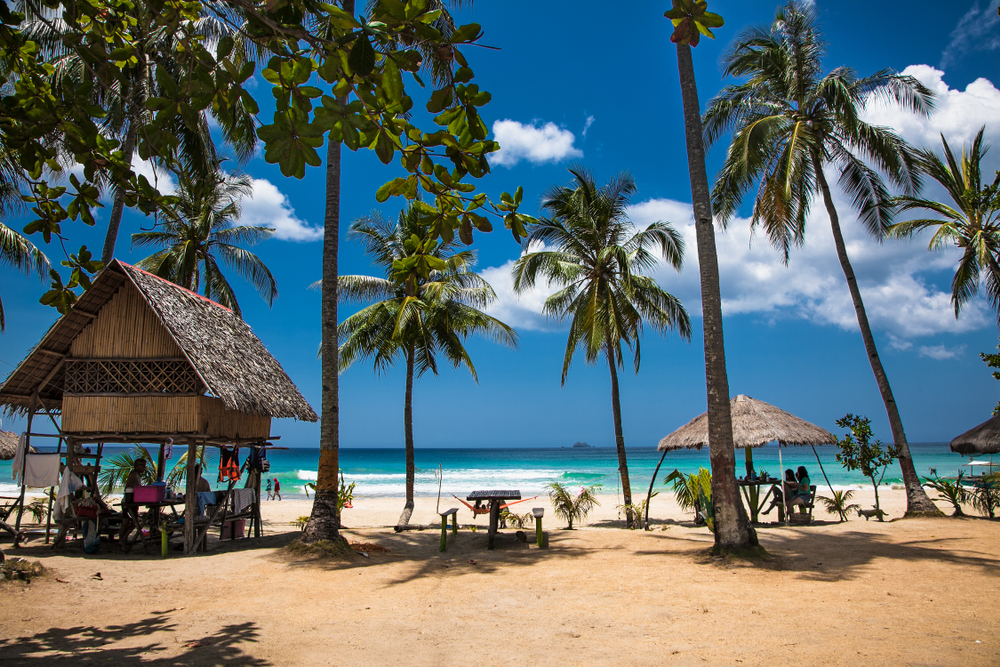
Siargao has emerged as one of Asia’s best surf-and-work destinations, with fiber internet and coworking now available in General Luna. Cebu offers the strongest urban infrastructure outside Manila. Palawan — including El Nido and Coron — now has Starlink options for nomads who want remote island life without completely sacrificing connectivity.
The Philippines is best for: English-speaking nomads, surfers, island-life seekers, and anyone who wants flexible long-stay options without a complex visa system.
Where the Philippines falls short: No dedicated digital nomad visa. Internet speeds (50–150 Mbps in major hubs) lag behind Bangkok and Chiang Mai. Power outages on remote islands are a reality. The rainy season (June–October) affects large parts of the country.
→ Read the full guide: Philippines for Digital Nomads
Which Southeast Asian Country Has the Best Visa for Digital Nomads in 2026?
Thailand wins this category outright. The Destination Thailand Visa (DTV) is the only officially active, purpose-built remote work visa among the four countries. It offers 5 years of multiple entry, 180-day stays per entry, legal remote work authorization for foreign companies, and dependent inclusion. The THB 500,000 bank balance requirement is the main barrier, but for those who qualify, it removes all visa uncertainty for half a decade.
Indonesia’s promised 5-year Digital Nomad Visa with zero local income tax would be a genuine competitor if fully operational — nomads should verify current status directly. Vietnam and the Philippines both offer practical workarounds (long in-country extension chains for the Philippines, business visas and E-Visa runs for Vietnam) but neither provides the legal certainty or simplicity of the DTV.

Which Southeast Asian Country Is the Most Affordable for Digital Nomads?
Vietnam is the clear winner on cost. A comfortable mid-range lifestyle in Da Nang or Hanoi runs $800–1,200/month. Ho Chi Minh City is slightly higher but still well under $1,500 for most nomads. Vietnam’s combination of cheap street food, affordable coworking, and low rent makes it the natural choice for nomads maximizing runway or saving aggressively.
The Philippines is close behind, particularly in Siargao and Palawan where $900–1,200/month covers a comfortable lifestyle. Cebu runs slightly higher. Thailand and Bali both have higher floors — mid-range living in Chiang Mai starts around $1,000–1,200, and Canggu rarely comes in under $1,500 for a modern apartment with solid Wi-Fi.
Which Southeast Asian Country Has the Best Internet for Remote Work?
Thailand leads on raw speed and reliability. Bangkok’s fiber infrastructure reaches gigabit speeds in many condos and coworking spaces. Chiang Mai runs 100–300 Mbps consistently. Islands like Koh Phangan and Koh Samui have added Starlink backup systems at major coworking spaces. 5G coverage from AIS and True is the most developed in the region.
The Philippines (50–150 Mbps in major hubs) and Vietnam (30–100 Mbps in cities) are both workable for most remote tasks. Bali’s connectivity is strong in Canggu and Ubud but more variable on the island fringes. In all four countries, coworking spaces offer the most reliable fallback — and every country in this guide has a developed coworking scene in its primary nomad cities.
Which Country Is Best for Digital Nomads Who Want Community?
Bali (Canggu specifically) has the deepest and most established digital nomad community in Southeast Asia — arguably in the world. Events, masterminds, coworking socials, and skill-sharing happen daily. The community has been building for over a decade.
Chiang Mai in Thailand runs a close second, with a nomad community that predates most of its competitors. Bangkok has scale and diversity. The Philippines — particularly Siargao — has a fast-growing, friendly expat community that punches above its weight for a smaller destination. Vietnam’s communities in Ho Chi Minh City and Da Nang are active but less dense than Bali or Chiang Mai.
Best Destinations Within Each Country
Top urban hub, beach or island base, and budget pick — side by side
How Does Nomados Help Digital Nomads in Southeast Asia?
Planning a move across Southeast Asia means managing visas, connectivity, insurance, and logistics across multiple countries.
Nomados brings that infrastructure into one place — AI-powered destination planning, simple visa guidance, eSIM access, cross-border health insurance, and airport lounge access.
Whether you’re choosing between Chiang Mai and Canggu or deciding whether Vietnam’s 90-day reset works for your schedule, Nomados gives you the clarity to move with confidence.
Frequently Asked Questions
Which Southeast Asian country is best for digital nomads in 2026? Thailand leads on visa security and infrastructure with the Destination Thailand Visa. Bali (Indonesia) leads on lifestyle and community. Vietnam leads on affordability. The Philippines leads on English ease and flexible long-stay extensions. The best choice depends on your priorities.
Does Thailand have a digital nomad visa? Yes. The Destination Thailand Visa (DTV) is fully operational. It offers 5 years of multiple entry, 180-day stays per entry, and explicit authorization for remote work with foreign companies. The financial requirement is THB 500,000 (~USD 14,000) in a bank account.
Does Bali have a digital nomad visa? Indonesia has announced a 5-year digital nomad visa with zero local income tax on foreign earnings. As of early 2026, confirm current operational status before planning long-term stays. The B211A business visa remains the primary option for stays up to 180 days.
Can I stay in Vietnam for more than 90 days as a digital nomad? The E-Visa allows 90 days for citizens of 80+ countries. Longer stays require a business visa through a local sponsor or periodic visa runs to neighboring countries. Vietnam does not currently offer a dedicated digital nomad visa.
How long can I stay in the Philippines without a visa? Most nationalities receive 30-day visa-free entry. Extensions can be processed in-country at the Bureau of Immigration, with stays extendable up to 36 months total. No separate digital nomad visa exists, but the extension system is one of the most practical in Southeast Asia.
Which Southeast Asian country has the cheapest cost of living for digital nomads? Vietnam offers the lowest costs overall, with mid-range living from $800–1,300/month in most cities. The Philippines and Chiang Mai, Thailand are the next most affordable options.
Is English widely spoken in Southeast Asia for digital nomads? The Philippines stands out as the only country in this group where English is an official language spoken fluently by most locals. English is common in Thai tourist and expat areas, and in Vietnam’s major cities. It is less reliable for day-to-day interactions in rural Vietnam or less-developed parts of Indonesia.
Which Southeast Asian country is best for surfing and remote work? Bali (Canggu, Uluwatu, Bukit Peninsula) and the Philippines (Siargao) are the top surf-and-work destinations in the region. Koh Phangan and Phuket in Thailand also offer surf opportunities with strong coworking infrastructure.
Connect with fellow location-independent professionals by joining our exclusive Nomados Digital Nomad Community for ongoing support, insider tips, and updates to enhance your borderless lifestyle.
Disclosure: Portions of this article were created with the assistance of AI tools and reviewed by the Nomados editorial team for accuracy and clarity.